The people of Ecuador are rising up to refound their country as a pluri-national homeland for all. This inspiring movement, with Ecuador's indigenous peoples at its heart, is part of the revolution spreading across the Americas, laying the groundwork for a new, fairer, world. Ecuador Rising aims to bring news and analysis of events unfolding in Ecuador to english speakers.

Monday, September 27, 2010

Glacial retreat: Ecuador's ticking environmental timebomb

Cayambe's receding ice mass highlights how global warming could leave some of the world's poorest people without water
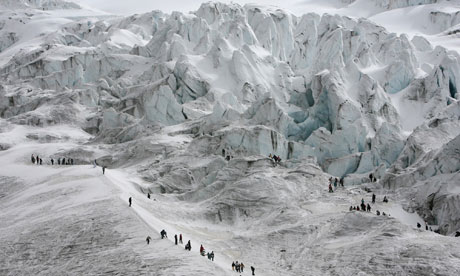
Cayambe volcano
Climate change has transformed vast swathes of Cayambe, once host to an annual ice harvesting competition, into bare rock. Photograph: Guillermo Granja/Reuters

The Cayambe volcano lies dead on the equator line in Ecuador and is the third-highest mountain in all the Americas at 17,159 ft (5,230m). It is really only climbed by serious "Andenistas" - as opposed to Alpinists - because of its crevasses and icecap, so the great Guardian/Oxfam climate expedition stopped at a modest 4,675m (14,250ft), which is nearly the height of Mont Blanc.

Okay, we went nearly all the way by Toyota pickup on a perilous track, but the wind was bitter and the snow lay deep on the glaciers.

Or what was left of them.

Where, just 25 years ago, there had been a three-kilometre long, 60-metre thick avalanche of ice, tumbling off the peak, we gazed down on bare, black rock. A whole valley once filled with ice was mostly empty. The snout of the glacier was 1,800 ft higher than it had been.

Our guide, the redoubtable Ecuadorean mountaineer Paul Williams, who has climbed Cayambe three times, remembered the glacier as a child. It use to stretch miles down the mountain. He was sad. "It was like losing a friend", he said.

Also with us was Bolivar Cereces, Ecuador's leading glaciologist. He is a conservative when it comes to glacier retreat, but he reckons that all Andean glaciers below 5,000 metres will be gone within 10-15 years. His forecast is based on a 1C predicted rise in global temperatures in the next 80 years. But with a 0.8C rise already recorded in the last 100 years, and temperatures in the Himalayas and other mountain regions rising much faster than expected, this may need to be revised.

What is certain is that most of the 20 glaciers on Cayambe are in full retreat. But Ecuador has no resources to monitor closely its seven icecaps, and all figures are estimates based on aerial photography, old photographs and local observation. The consenus is that nearly 40% of Cayambe's ice mass has been lost in a generation, with nearly 10% in the last decade.

For the next few years, glacier retreat may not be a great problem around Cayambe, because the extra melt water from the icecap makes up for the lack of rain that is being experienced. But this cannot last. Soon, the melting of the Andean cryosphere - or iceworld - will impact heavily on urban water supplies and therefore on some of the poorest people in the world, who depend on the rivers, which in turn depend on the melt water off mountains like Cayambe.

We made our way down the mountain, chastened by what we had seen and heard. But it was not all gloom. There was a good story of people adapting to climate change.

It seems that the small farmers, or campesinos, of Cayambe have, over generations, been steadily pushed up the mountain by the large landowners. This forced them on to what is known as the paramo, the high pastures on the mountain slopes that act as a giant sponge which stores and regulates water from the glaciers. Their cattle and the ploughing of land seriously degraded the land and led to water conflicts. In the dry season, the pasture land would dry up completely. Climate change, which has intensified and led to less rain in the last decade, only made things worse.

Then the community of several thousand indigenous people living on the mountain took matters into their own hands. In a social revolution, and without the absent state's permission, they drove the cattle of the rich farmers down the mountain, limited the numbers of their own allowed on the paramo, cleaned out many miles of old water channels, and banned the burning of the land. Now they reckon that they have increased water supplies to all farms by 10% - a clear case of conservation reversing the effects of climate change. Next, they plan to bring water all the way round the mountain from the east side, which gets more rain.

What is interesting is that these farmers linked climate change directly to their own poverty, and took responsibility for adapting to climate change without waiting for the state or the World Bank or NGOs. Inequality and colonialism caused climate change, they reasoned, so eliminate those and you will sort it. It is a microcosm of the political and social revolution going on all over Ecuador.

But if the glaciers really all go on Cayambe, the campesinos may have to think again.

Ecuador: Reality check

Sep 22nd 2010

IN 2007 Ecuador’s president, Rafael Correa, proposed a rather unorthodox approach to exploiting his country’s oil resources. Rather than pumping the estimated 900m barrels in the Ishpingo-Tiputini-Tambococha field buried below the Yasuní rainforest park—which represent around a fifth of the country’s total reserves—he suggested that the world pay his country $3.6 billion to leave them underground, thus preventing 436m tonnes of carbon dioxide from entering the atmosphere.

The scheme’s prospects were always dubious. The oil’s net present value is over four times greater than the market price of the European carbon credits Mr Correa hoped to obtain. Moreover, the programme’s eligibility for the credits was questionable, since taking Ecuadorean oil off the market might well lead companies to extract even dirtier sources of petroleum elsewhere. And Ecuador’s spotty record of honouring its international commitments gave would-be participants little comfort that it would abide by the deal’s terms—Mr Correa defaulted on $3.2 billion of bonds in 2008.

Nonetheless, Ecuador forged ahead. In 2008, it received a €300,000 ($425,000) grant from Germany for feasibility studies. And six weeks ago it signed a memorandum of understanding with the United Nations Development Programme, which stipulated that the organisation would administer a trust fund that would use payments into the scheme for Ecuadorean renewable-energy projects. Chile donated a polite $100,000 last week.

Now, however, the wheels are starting to come off. Ecuador had been counting on a $700m contribution from Germany over the next decade. Dirk Niebel, the German government’s cooperation minister, recently wrote that the plan lacks “a comprehensive rationale, a clear structure of goals and concrete statements on which guarantees will be given,” suggesting that few German funds will be forthcoming. To assuage such concerns, Ecuador’s patrimony minister, María Fernanda Espinosa, will travel to Germany next week. But she will have a tough time accounting for the decision by Ecuador’s Congress last week to cancel the country’s investment-protection treaty with Germany.

The plan is also attracting increased scrutiny at home. Local activists have long questioned Mr Correa’s commitment to protecting the environment. They point out that the scheme would protect just 15% of the Yasuní park, and that the government continues to subsidise domestic fuel consumption.

Perhaps the best indicator of the programme’s prospects is that the president himself is hedging his bets. Even as he seeks contributions to the fund, he has continued preparations for a “Plan B” in which the state oil company would drill the field.

Ecuador: Small-Scale Miners Questioning Large-Scale Interests in Southern Amazon

Written by Jennifer Moore for Upside Down World
Wednesday, 22 September 2010 15:38
Only days after small-scale and artisanal miners pronounced themselves in favor of land use planning and against large scale mining in Ecuador's southern Amazon, a heavy deployment of police and military was ordered to evict a group of these miners for alleged environmental damages. Approximately 1,500 police and military officers took part in the September 15 operation, or roughly one officer for every resident of the small county of Paquisha in the province of Zamora Chinchipe, where confrontations took place.

The province of Zamora Chinchipe is the focal point for development of major large scale gold and copper mining operations controlled by Canadian and Chinese interests, including Kinross Gold, Dynasty Metals & Mining and CRCC-Tongguan, which the Ecuadorian government has made a priority.

Provincial prefect Salvador Quishpe, however, says that evictions forewarn of increasing tension as national and foreign-backed projects enter into conflict with local development priorities. Quishpe is an indigenous leader who has been actively leading resistance to large scale metallic mining in Ecuador during recent years, and who has been building support among small-scale and artisanal miners in his home province.

Forceful eviction

Last Wednesday, four hundred indigenous and non-indigenous small-scale and artisanal miners and farmers were blocking the main road to Paquisha when five hundred police arrived with orders to evict the protestors from the area of Congüime.


Midday reinforcements brought the number of police and military to about 1,500.

Protesters fought against police with sticks and stones to which state forces responded with tear gas. Confrontations left five people injured, two reportedly from shotgun wounds. Two people were also detained for allegedly carrying explosives and firearms.


Later, armed forces searched private property to seize over a dozen backhoes that small-scale miners in the area use to look for gold along the Nangaritza River.

The Secretary for Peoples, Social Movements and Citizen Participation, Alexandra Ocles, defended the government's actions against “illegal mining” on national radio and stated that the measure was taken “in order to guarantee discontamination (sic) of the area and to enter into a process of regularizing mining activities.”


Evictions and concerns among some miners that they will not be relocated seems to be contributing to growing alliances between this sector and resistance to large scale mining in the province. Another eviction took place in early August when fifty-six miners were expelled from the area of San Luis in Podocarpus National Park, while at least one other investigation in the county of Paquisha is also underway.

Segundo Salinas, a local miner from Paquisha, told Ecuador's Daily Express that “The government is attacking workers who defended the Condor mountain range during the war of Paquisha, with the aim of handing over the country's mineral wealth to foreign companies.” The Condor mountain range has been much fought over with neighbouring Peru during several armed conflicts in past decades.


Small-scale and artisanal miners side with provincial government

In the days and weeks prior to the recent operation, provincial leaders from Zamora Chinchipe had been meeting with groups of miners to reach agreement over a proposed land use planning project, rights for local workers and joint opposition to large scale mining. Three days prior to last week's police operation, a provincial assembly was held at which those present “petitioned the government of President Rafael Correa to order the departure of multinational companies from the region and the recognition of the right to work for local miners,” reported BBC World.


According to a press bulletin issued by the province, leaders of small-scale and artisanal mining operations were asking, “How is it possible that we are treated as illegal on our own land while multinational companies get all the support?” The same bulletin cited provincial leaders who acknowledged that the “environmental impacts of small-scale mining are worrying, however, we will not allow evictions to take place that will give way to multinational interests.”

Until recently, small scale and artisanal gold mining were the principal metallic mining activities in Ecuador. Important -enters of this type of mining are situated within the country's south and over the last three decades have led to serious environmental damages with repercussions for both miners and local communities. However precarious, it remains a source of income for tens of thousands of families.


Following a decade of World Bank-backed legal reforms and promotion of Ecuador's mining potential in the 1990s, multinational mining companies started to invest in developing the country's untapped mineral riches. Initially led by Canadian-financed junior mining companies, areas such as the Condor mountain range, which borders the province of Zamora Chinchipe to the east and separates it from Peru's northern Amazon, were staked out for large scale gold and copper developments. Senior companies, such as Toronto-based Kinross Gold, began buying up the biggest holdings in the province during a process of mining law reforms from 2008 to 2009, which strengthened state participation and control over the sector.

As part of these same legal reforms, Ecuadorian legislators set a timeline of 180 days for the government to carry out a census of informal mining operations in the country and to begin a process of regularization. Political representatives from the province of Zamora Chinchipe claim that this process has not been carried through and area miners express fear that more evictions will be forthcoming.

Representatives of a subsidiary belonging to Vancouver-based Dynasty Metals & Mining, which holds one mineral concession in the county of Paquisha, has filed a complaint against artisanal miners that is under investigation. Under new mining rules, companies can solicit protection from authorities against informal mining taking place on their concessions.


A representative of Kinross told BBC World, however, that the erradication of small-scale mining is not their aim. “Our commitment,” he said, “is simply to inform authorties about the extent of informal mining taking place in the sector for authorities to take the appropriate decision.”

The Prefect's land use planning project

Resource conflicts in the southern Amazon have emerged over the last decade between companies and indigenous and non-indigenous communities concerned about the potential impacts of large scale operations on their lands and lives. But only since former national congressman Salvador Quishpe was elected as prefect of the province in 2009 have agreements been forged with small-scale and artisanal mining groups to join the resistance.


Quishpe is in open dispute with the government of President Rafael Correa. Correa strongly supports multinational mining companies that have invested in Ecuador, saying that their top-of-the-line technology and Ecuador's strengthened regulations will help avoid serious impacts from future large scale operations. The President also personally intervened during the country's 2009 general elections when he visited Zamora Chinchipe and publicly insulted Quishpe, encouraging voters not to support him.

Quishpe, however, calls the most recent eviction “an abuse of power” and says that he is not just confronting multinational operations, “but also those from here.” Current agreements between the province and small-scale and artisanal miners include commitments to establish a “Provincial Organization of Artisanal and Scmall Scale Miners” that will be coordinated by the National Assembly representative for Zamora Chinchipe Clever Jimenez. This incudes an agreement to participate in a land use planning process that would exclude large scale mining and explicitly define areas in which other mining activities may take place, giving priority to agriculture, livestock husbandry, water, biodiversity and tourism. Quishpe has also asked for dialogue with the government to talk about legalization for small-scale and artisanal mining, about programs to reduce environmental contamination, and how to coordinate with his land use planning project.

Constructive dialogue could be hard to come by as long as opposition to large scale mining remains a central tenet of provincial organizing in Zamora Chinchipe. The Interior Minister Gustavo Jalkh has said attempts at dialogue have been obstructed by “political manipulation” and informed the press that operations will continue to control informal mining activities.

Ecuador looks to its own people in the battle against climate change

Ecuador's indigenous peoples are proactive in adapting society to deal with global warming, effectively guiding the government

 Yasuni National Park, in Ecuador's northeastern jungle
Ecuador's Yasuni park where, as part of the climate change battle, oil will be left in the ground if donors pay half its value. Photograph: Dolores Ochoa/AP

We left thirsty Peru and have reached Quito in Ecuador on the great Oxfam/Guardian Andean climate journey. First stop is to meet the government and community leaders of a state that stretches from the Pacific coast, over the mountains, and deep into the Amazon forest.

The environment minister is the redoubtable Maria Fernanda Espinoza, who is grappling with the contradictions of having a revolutionary new constitution that guarantees the rights of nature and all living entities, yet depends on vast oil reserves. She is adamant that Ecuador wants to find ways to get out of the petrol economy and invest in renewables to avoid climate change.

One plan is to guarantee to leave nearly one billion barrels of oil – nearly 20% of the country's reserves – in the ground if rich countries and individuals give them $3.6bn, half the oil's value. The money from the Yasuni project would go to a UN-run fund to pay for national park conservation, as well as health and education. It would save nearly 400m tonnes of emissions and is being hailed as an innovative climate change solution.

Hmmm. No one knows if this will catch on – even as we meet the minister, the press is reporting that the plan's biggest western backer, Germany, is having second thoughts – but the radical government led by Rafael Correa will push it at the global climate change talks in Mexico in November.

(Less remarkable, but something I have never seen before in 20 years of interviewing politicians, is the way Espinoza gets a senior civil servant to hold, brush and lovingly arrange her long brown hair throughout the hour-long interview. It's a cross between a hairdresing salon and a Vanity Fair photo-shoot.)

The leaders of the country's powerful, 12 million-strong indigenous peoples are also image conscious. Delfin Tenesaca, who runs the largest group, Ecuarunari, gives us an audience in front of a giant scarlet banner proclaiming human, water and other rights. The group sees climate change as an urgent social issue that can only be addressed by communities organising themselves.

Even though Ecuador is right on the equator and is somewhat protected from climate change by the vast Amazon rainforest, its glaciers are melting fast and rainfall is decreasing steadily.

For the indigenous peoples, the "Pachamama" - or Mother Earth - is ill. We are going through a period of "vaciacad", or melancholy, and we need to embrace "Sumak Kawsay", the good way of living to restire Mother Earth's balance, says Tenesaca.

Interpreted, that means the world must abandon the neo-liberal policies that favour the rich. It must redistribute land, make the right to water universal and protect biodiversity. Any other way guarantees climate change, poverty and inequality.

But the indigenous peoples' relationship with government is complex. The new constitution gives them far more than what they had before, but they bitterly complain that the state has not passed the laws needed to make the constitution workable.

Indigenous peoples throughout Latin America are gaining confidence. They are at the forefront of the new political philosophies emerging from Bolivia to Venezuela. Climate change – specifically the right to water – is central to the political revolution taking place.

One of the architects of the Ecuadorean constitition is Humerto Cholango, the man tipped to lead all Andean indigenous peoples.

This intellectual onion grower, a friend of Bolivia's radical president Evo Morales, shares four hectares with his eight brothers on the slopes of the ice-capped volcano Coyambe. He has led a remarkable struggle to protect and provide water for thousands of small farmers.

They have, by consensus and without the help of the central or local state, redistributed land and water, conserved the high pastures of the mountain (which acts as a giant sponge), increased water supply by 10%, and repaired thousands of miles of water channel. It is a model of "Sumak Kawsay". If this had been a World Bank project, it would have cost billions and probably would not have succeeded.

What is impressive is that the indigenous peoples of Ecuador are proactive in adapting society to climate change. Government now gets its ideas from them.

Ecuador May Spend $600 Million to Cut Payrolls, Espinosa Says

By Nathan Gill

Sept. 21 (Bloomberg) -- Ecuador may spend as much as $600 million to trim older workers from government payrolls in an effort to reduce the size of the state workforce and increase efficiency, Labor Minister Richard Espinosa said.

Ecuador’s government plans to ask 10,000 workers aged 65 to 69 to voluntarily retire in exchange for a severance package that would be paid half in cash and half in 3- or 5-year bonds, Espinosa said yesterday in an interview in Quito. Workers 70 and older would be forced to retire and get an all-cash severance.

Espinosa’s comments reveal some details about how the government would pay the costs associated with the layoffs, which President Rafael Correa first proposed to lawmakers in July 2009. The bill is under debate, and Espinosa predicted the measure will become law by Oct. 10.

The law seeks “a much more efficient state with innovative professionals and new ideas,” Espinosa, a 38-year-old former marketing executive, said from his offices in central Quito. “We need to generate change in a much faster way than we are doing now.”

Paying retirees with bonds could hurt Ecuador’s credit rating by increasing government debt, said Ramiro Crespo, head of Quito-based brokerage Analytica Securities CA Casa de Valores.

“The state doesn’t have a lot of liquidity,” Crespo said in a telephone interview. “The worry is that they’ve talked about paying contractors with bonds, now they are doing it with retirees, who knows what could come tomorrow.”

Ecuador has a Caa3 long-term foreign currency credit rating from Moody’s Investors Service, eight levels below investment grade, while Standard and Poor’s rates the country’s debt B-, according to data compiled by Bloomberg. The government defaulted on $3.2 billion of debt in 2008.

The yield on Ecuador’s 9.375 percent bonds maturing in 2015 has risen 86 basis points, or 0.86 percentage point, this year to 11.86 percent, according to JPMorgan Chase & Co. The price has declined to 91 cents on the dollar.

Ecuador’s Urban and Housing Development Minister Walter Solis said in June that the government may begin paying public- works contractors with domestic bonds as a lack of financing limits its ability to pay in cash.

Thursday, September 16, 2010

Ecuador: President Vetoes Higher Education Bill

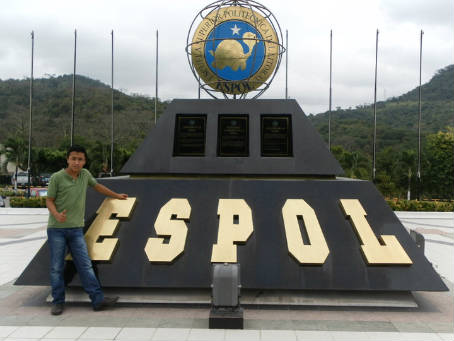
This past January, Webometrics, a Spaniard research group, released its “Webometrics Ranking of World Universities.” The first Ecuadorian university to appear in the ranking was Escuela Superior Politecnica del Litoral (ESPOL [es]) in position 702 [es]. There are only two Ecuadorian universities ranked among the top 100 in Latin America: ESPOL at number 25 and UTPL (Technical University of Loja) at number 66. This kind of exposure of Ecuadorian higher education has been a concern for many presidents, and the current government is working towards the approval of a new bill which affects higher education in Ecuador.

Litoral Polytechnic School - Guayaquil. Photo courtesy of Juan Francisco Guerra Salazar, an industrial engineering student in the ESPOL

The new organic bill for higher education is part of the objectives in the new Ecuadorian Constitution approved by a referendum. The education bill was approved by the national assembly and sent to the president for a final decision. However, President Rafael Correa vetoed the bill and sent it back to the assembly for reconsideration [es] as it did not coincide with the original project. In order to get the bill passed by the national assembly some concessions had to be made, but Correa is now reintroducing the original ideas through amendments. These amendments include that the Secretary of Education would oversee higher education, and that the involvement of students as decision makers in Universities, as part of what is called a “co-government,” would be reduced from 50% to 25%.

The bill will also regulate the operations of all institutions involved in higher education in Ecuador. Many have already been subject to evaluations, but universities do not want to give up the so-called “university autonomy.” Both major organizations of Ecuadorian universities, the Ecuador Association of Universities and Polytechnic Schools (ASUEPE) and the Ecuadorian Corporation of Private Universities (CEUPA), wish they had an organism like the Higher Education Council (CONESUP [es]) to oversee their education centers; therefore, both groups are opposed to the new bill which makes the Secretary of Education the only institution responsible for higher education policies. Furthermore, there are deep disagreements about the bill inside universities and the National Planning and Development Secretariat (SENPLADES), the organism whose main goal is to act as a watchdog for all institutions of higher education in the country.

René Ramírez, SENPLADES' secretary, was interviewed by El Telégrafo, a major Ecuadorian newspaper, where he summarizes the bill [es]:

Los cambios están canalizados a mejorar el nivel académico de las universidades, el nivel profesional de los docentes y otorgar becas por meritocracia…busca destinar recursos para la investigación en las universidades públicas y privadas…la existencia de docentes a tiempo completo será uno de los requisitos indispensables que deberán cumplir las universidades; además… la mayoría del Consejo Universitario estará en manos de la comunidad académica y no del Estado.

The changes are channeled to improve the academic standards of universities, the professional level of professors and to provide scholarships based on merit … it seeks to allocate resources for research in public and private universities … the employment of full-time teachers will be one of the prerequisites to be met by universities, also … most of the University Council will be held by the academic community and not the state.

But not everyone agrees with the government's suggested amendments. Paula Romo [es] is an assemblywoman for PAIS, the political party of president Correa. She agrees that the bill is a positive step, including the points on the vetoed project, but she also voices concerns about the inequality in the treatment of universities:

En lo que se refiere al mecanismo de designación de autoridades académicas la ley hace una excepción para las universidades militares y las que se han acogido al modus vivendi; estas universidades, en este tema no están obligadas a regirse por la ley, sino por sus propios estatutos. Estas excepciones no son correctas ni justificables en un Estado de Derecho y menos en un Estado Laico.

In regards to the mechanism for the appointment of academic authorities, the bill makes an exception for military universities and those that have benefited of the modus vivendi, these universities, on this topic, are not obliged to abide by the law, but rather by their own statutes. These exceptions are not right nor justifiable under the rule of law and much less under a Secular State.

Students are defending the 50% student participation in co-governments, since the amended bill would diminish their participation. But even students disagree on this issue. Furthermore, the National Federation of Polytechnic Students (FEPON) complains that their proposals were never heard, and they think that the new bill is a regression on students’ rights. The president of the Catholic University Student Federation -Quito (FEUCE-Q) on the other hand, in an interview posted at ecuadorinmediato.com, supports the assignment of funds to research and the new way authorities will be elected according to Correa’s suggestions:

El veto emitido por el Presidente de la República, es sumamente extenso, tiene 98 páginas, trata bastantes aspectos de la Ley, hay algunos que son radiales, hay algunos que en verdad son interesantes, creo que son bastantes positivos y también existen otros en los cuales podemos discrepar con el criterio del Presidente

The veto by the President of the Republic, is very extensive, has 98 pages, deals with many aspects of the law, there are some that are radial, there are some that are really interesting, I think they are quite positive and there are also others in which we disagree with the President's opinion.

In her blog, Gabriela Salazar [es] justifies in some way the need for changes in higher education; she quotes Latitud Central, a newspaper from the Central University, and explains why some professors should resign immediately:

“¡AL FIN CARAJO!” y continúa, “Sí, ése es el grito de cientos de docentes que al fin en esta universidad se van a poner las cosas en orden”…y delira sobre una universidad hundida, de profesores universitarios tramposos que urdían accidentes de tránsito y enfermedades para no asistir, “profesores vagos a los que hay que llamarlos colegas”, en fin, de una universidad donde “se festinó el tiempo y no se hizo NADA”. E insiste así: “¡Ahora, si CARAJO vamos a estudiar!

“FINALLY” and it continues, “Yes, that is the cry of hundreds of professors who think that at last in this university things are going to be in order” … and it raves about a university ruined by cheating educators who made up traffic accidents and diseases to not attend their classes, “lazy professors who we have to call colleagues,” in short, a university where “time was wasted and nothing was done.” And insists, like this: “Now, we are finally going to study!”

In this flow of discrepancies one might come to think that many authorities are against the vetoed project, but Jose Elias in the blog Dialogo con Joselias [es] reports that at least 7 of the highest authorities in Ecuadorian universities met up in Cuenca to analyze the presidential veto. This blogger quotes Edgar Seminario of the Central University:

“No estamos a favor ni en contra del Gobierno, estamos a favor de un cambio radical en algunos aspectos como la importancia de la investigación en los procesos académicos, entre otros beneficios que trae el veto…Somos divergentes con otras opiniones, como la de defender la existencia de una Secretaria Técnica de Educación Superior, que para nosotros significa un cambio sustancial.”

“We are not in favor or against the government, we favor a radical change in some aspects as the importance of research in academic processes, among other benefits the veto presents … We differ with other opinions, such as defending the existence of a Higher Education Technical Secretariat, which for us means a substantial change.

While some Ecuadorians still struggle to reach an agreement on what is good for higher education in their country, others can't even get into university this year. Voces Lojana [es]UNL [es]), which this year only issued 2,410 spots to fulfill a demand of over 7,000 aspiring students. There is one thing everyone seems to agree on: all Ecuadorians want to improve the quality of their higher education. But before any change happens, first they will have to come to an agreement. points out that some 3,502 students are fighting in courts for their right to get into the National University of Loja (

Wednesday, September 15, 2010

Lawsuit Targets Chevron "Dirty Tricks" Operative Over Ecuador Video Corruption Scandal

Amazon Defense Coalition

FOR IMMEDIATE RELEASE 2010-09-14

Karen Hinton at 703-798-3109 or karen@hintoncommunications.com
Mitch Anderson at 415-342-4783 or mitch@amazonwatch.org

Lawsuit Targets Chevron "Dirty Tricks" Operative Over Ecuador Video Corruption Scandal

Chevron's Diego Borja Faces Deposition in U.S. Over Activities In Ecuador

Chevron employee Diego Borja, the oil giant's self-proclaimed "dirty tricks" operative in Ecuador, has been targeted with a subpoena and deposition demand in California where he now lives on Chevron's payroll within miles of its global headquarters, the Los Angeles/San Francisco Daily Journal reported today.

Borja, who has worked for Chevron in Ecuador from at least 2004 until the video scandal erupted in 2009, has been taped in a phone conversation saying he has incriminating evidence that would cause Chevron to lose the Ecuador environmental litigation, according to papers filed September 10th in federal court in San Francisco. Chevron paid for Borja to relocate to the United States, where he remains on the company payroll while living in a luxury house abutting a golf course in a gated community.

Borja has failed to turn over the incriminating evidence, but representatives of the plaintiffs have long charged the oil giant with engaging in corrupt practices to undermine the trial.

"The subpoena is important because Borja has bragged about being at the epicenter of Chevron's fraudulent activities in Ecuador," said Karen Hinton, spokesperson for the Amazon Defense Coalition.

The court filings, made by the American law firm Winston & Strawn on behalf of Ecuadorian authorities fighting Chevron over an international arbitration claim, seek to depose Borja about his involvement in the sting operation, conducted with Borja's sidekick Wayne Hansen. In 2009, both Borja and Hansen used cameras hidden in a pen and a watch to secretly tape meetings with the trial judge presiding over the environmental case, and supposed government officials.

The men then turned over the tapes to Chevron, which posted them on YouTube. Chevron initially alleged the tapes showed an attempted bribery of the judge, but it was only the Chevron employee who discussed the bribe, and the judge was never in a meeting when a bribe was discussed.

Despite this fact, Chevron lawyer Andrea Neuman told the Daily Journal that the judge was seen on the tapes "soliciting" a bribe. It also turned out that Hansen was a convicted drug trafficker with a history of legal problems, and had been lying about owning a remediation company, which stood to benefit from a judgment ordering a clean-up of the oil disaster. For more information about Borja and Hansen, click here.

For more than a year, many journalists and the falsely accused judge have questioned the credibility of Chevron's claims. The judge and representatives of the plaintiffs have charged that the sting was likely orchestrated by Chevron's U.S. legal counsel, and could expose the company to potential civil and criminal liability in the U.S. and Ecuador, said Hinton. Chevron's lawyers have admitted meeting with Borja in the United States before the only meeting where the issue of a bribe was raised.

The court documents supporting Borja's subpoena make it plain that:

  • Chevron claimed in a press release that Borja was a "Good Samaritan," when in fact he was working under the direction of Chevron's legal team since at least 2004, and he himself said he was responsible for "dirty tricks" during the trial;

  • Borja formed four dummy companies for Chevron to make the work he did for Chevron appear independent;

  • Borja's wife also worked for Chevron, and both he and his wife signed documents as representatives of Severn Trent Labs, a supposedly independent laboratory used to test soil and water samples from the litigation;

  • Borja and his Chevron "boss" attempted to infiltrate a lab used by the plaintiffs using false names.

Among Borja's quotes from the tapes cited in the legal papers is the following passage:

"... I have correspondence [with Chevron officials] that talks about things you can't even imagine, dude... they're things that can make the Amazons win this just like this [snapping fingers]... I mean, what I have is conclusive evidence, photos of how they managed things internally."

The tapes were made by Santiago Escobar, a childhood friend of Borja's who lives in Canada. They have been turned over to authorities in Ecuador and the United States.

Escobar had told journalists that Borja indicated to him on several occasions that he has carried out a series of clandestine "dirty tricks" operations on behalf of Chevron over a series of years. In June 2009, Escobar said Borja told him he arranged "the biggest business deal of his life" that would "take down the lawsuit" and that he had received a "ton of money" from Chevron for his work.

Chevron Fraud Evidence Mounts in Ecuador

Amazon Defense Coalition

FOR IMMEDIATE RELEASE 2010-09-13

Karen Hinton at 703-798-3109 or karen [at] hintoncommunications.com
Mitch Anderson at 415-342-4783 or mitch [at] amazonwatch.org

Chevron Fraud Evidence Mounts in Ecuador

Bogus Lab Tests, Threats against Plaintiffs Counsel, Ex Parte Meetings with Judge Paint Nasty Picture of Oil Giant's Litigation Tactics

Evidence of fraud by Chevron is mounting in Ecuador, dealing the oil giant a potentially crippling blow as it faces a potential multi-billion judgment for environmental damage, representatives of the Amazonian communities asserted today.

"Chevron's true complaint is not with the Ecuadorian courts, but with the evidence of its own wrongdoing"

In a series of recent court filings in federal courts across the United States, the Ecuadorians suing Chevron for oil contamination in the Amazon rainforest have demonstrated the oil company faces an increasing array of problems, among them:

  • Diego Borja, a Chevron contractor in Ecuador, ran a "dirty tricks" operation for the oil giant in Ecuador that attempted to ensnare the trial judge in a corruption scandal, according to taped phone conversations.
  • Borja claimed that Chevron had "cooked" court evidence and that he would turn against Chevron if company officials did not pay him what they promised for videotapes he made of the judge in the lawsuit. Widely covered by the news media, the videotapes were later discredited.
  • Chevron hired Kroll, the publicly traded investigations firm, to try to pay an American journalist to become an undercover spy for the company in Ecuador, according to a recent article in The Atlantic.
  • Chevron's lawyers had ex parte meetings with judges and have not denied having ex parte meetings with court-appointed experts on the case – the exact same basis for Chevron's false claims of "fraud" against lawyers for the plaintiffs.
  • The plaintiffs also produced evidence that a court-appointed expert adopted many materials wholesale that were prepared by Chevron's own expert without citation – the exact same charge that Chevron has leveled against the plaintiffs.
  • Two Chevron officials are under criminal indictment in Ecuador for, according to the charges, conspiring to defraud the government by lying about the results of a sham remediation in the mid-1990s. Chevron's own tests submitted into evidence show illegal levels of contamination at the so-called "remediated" sites.
  • Due to a series of death threats from unknown sources, lawyers for the plaintiffs and their families are now protected with armed bodyguards.

Chevron is arguing in various jurisdictions around the country that any ex parte meetings between the plaintiffs and a court-appointed expert prove "fraud," though they have failed to cite any order, rule, regulation, or law prohibiting such meetings under Ecuadorian court procedures. Legal experts in both Ecuador and in the United States have disagreed with Chevron's argument.

"Chevron has not denied that its own lawyers met with court experts and has yet to deny the evidence that its lawyers met ex parte with judges in the lawsuit," said Ilann Maazel, an American who is representing the Ecuadorians. "Why can Chevron meet ex parte with judges, but plaintiffs can not meet with an expert? This is hypocrisy with a capital "H".

"Chevron's true complaint is not with the Ecuadorian courts, but with the evidence of its own wrongdoing," Maazel said.

Originally filed in the U.S. in 1993, Chevron requested the case be moved to Ecuador. Now that a decision is approaching and the evidence points to its culpability, Chevron is attempting to retry the lawsuit in the same U.S. court system it once rejected as inappropriate.

In a brief submitted to the Southern District Court of New York last week, attorneys for the Ecuadorians argued that Chevron had conducted ex parte meetings with court-appointed experts and that one of them, Gerado Barros, copied entire pages of a 2005 Chevron report into his expert report, entitled Prácticas y Reglamentos Internacionales Para el Uso y la Remediación de Piscinas de Campos Petroleros. Barros is one of several experts who have written about 100 reports, in total, that the court may rely on as evidence in the case. The majority of the reports show illegal levels of contamination, even at sites allegedly "remediated" by Texaco.

The plaintiffs assert that adopting materials directly from reports is not inappropriate, as long as the court-appointed expert is in agreement with the materials or is using them to explain or make a point. Such practice is common in U.S. courts, Maazel said.

Maazel said Chevron has yet to identify an "order, rule regulation, or law prohibiting" contact with experts.

Penn State law professor Catherine Rogers, a scholar of international arbitration and professional ethics, wrote on Opiniojuris.org, a well-respected online legal forum, that Ecuadorian "standards for the impartiality of court-appointed experts may treat such attendance (ex parte meetings) as acceptable, and perhaps not even necessary to disclose..."

Chevron Fraud in Ecuador: Response to Fortune.com Article

Amazon Defense Coalition

FOR IMMEDIATE RELEASE 2010-09-13

Karen Hinton at 703-798-3109 or karen [at] hintoncommunications.com
Mitch Anderson at 415-342-4783 or mitch [at] amazonwatch.org

Chevron Fraud in Ecuador: Response to Fortune.com Article

The Amazon Defense Coalition issued the following response today to an article that appeared today on Fortune.com about the oil contamination lawsuit against Chevron, filed by Ecuadorians living in the contaminated area:

Roger Parloff's legal analysis in Fortune (Evidence of fraud mounts in Ecuadorian suit against Chevron, September 13) is one-sided and fails to adequately capture the enormous financial risk faced by Chevron in Ecuador, even if one accepts his erroneous theory about fraud regarding an expert damage assessment. Importantly, Parloff has never been to Ecuador, never examined the 200,000-page trial record, never seen an original lab report from the 64,000 sampling results at trial, never talked to any witnesses who have testified in the case, and utterly fails to understand either the enormous quantum of evidence or the procedural rules that govern trials in Chevron's preferred forum of Ecuador.

Chevron Attacks Court, Not Content of Report

Parloff's theory (and one adopted by several U.S. judges without expertise in Ecuadorian law and procedure) is that ex parte contacts with or party submissions to a court-appointed expert are improper and that therefore the Ecuador damages assessment of $27 billion, prepared by court expert Richard Cabrera, is somehow invalid. This is incorrect as a matter of fact and law. Moreover, neither Parloff nor Chevron can point to even one aspect of the Cabrera report that is not reasonable, scientifically sound, and based on the evidence before the court. Given what we know from the BP disaster in the Gulf and other large environmental clean-ups, the damages number in Ecuador is actually modest when one considers the half-century of time that the extensive contamination has been harming the rainforest and its tens of thousands of inhabitants.

Chevron Met Ex Parte & Its Work Used in Court Reports

Parloff failed to fully explain that both parties before the Ecuador court have cooperated with court-appointed experts throughout the case. Cabrera invited the parties to give him information; this is memorialized in various court orders. Chevron, for tactical reasons (apparently because it wanted to discredit the court), chose to boycott the Cabrera process. But throughout the trial both parties had ex parte contact with a variety of experts on various occasions and often prepared materials for experts in whole or in part for adoption. This includes Chevron's contacts with court-appointed experts such as Gerardo Barros and Jorge Bermeo, who did independent reports on various aspects of the damages. Some of the independent court experts who prepared reports at Chevron's request either used or adopted materials that Chevron's legal team (including U.S. counsel and U.S. consulting experts) drafted – exactly the supposed "fraud" that Chevron's public relations machine falsely claims taints the trial.

Manufactured Controversy Is a Sideshow

Much of the evidence that Parloff breathlessly reports that Chevron's outside counsel "discovered" has been known to the court in Ecuador and Chevron itself for more than two years. This includes the fact that Cabrera was given (under court order) thousands of pages from the plaintiffs for use in his report. The manufactured controversy over the Cabrera report is a sideshow designed by Chevron to fog up the issue of its own enormous liability in the face of questions from several of its large institutional shareholders and analysts who cover the oil industry. There are now more than 100 expert reports in evidence before the Ecuador court, totaling tens of thousands of pages. An additional damage assessment from each party is due September 16th; Chevron, which has never been interested in the truth, has announced that it will boycott that process and forego the submission of its own report.

Plaintiffs In Strong Enforcement Position

The idea that Ecuador's court must base damages only on the Cabrera report is ludicrous. Under Ecuadorian law, the judge is not required to adopt any portion of any expert report. Thus, for Chevron to focus its million-dollar U.S. discovery strategy on the Cabrera report is increasingly futile. Parloff fails to realize that even if an enforcement court in the U.S. or some other country were to find contacts between a party and court experts to be improper, it would not nullify a finding of liability and damages given the voluminous evidence against Chevron and the numerous independent bases to impose liability and damages – including Chevron's own technical reports, which prove the case of the plaintiffs. Contrary to Parloff's conclusion, that puts the Amazonian plaintiffs in a very strong litigation position in an enforcement context.

Chevron's Abusive Litigation Causes More Suffering

Chevron faces an enormous liability in Ecuador because it deliberately and indisputably discharged billions of gallons of toxic waste into the rainforest over a 26-year period, decimating indigenous groups and poisoning the water supply in an area the size of Rhode Island. Rather than deal with the evidence, Chevron has unleashed a massive public relations assault on the Ecuador court system, tried to sue lawyers for the plaintiffs, tried to intimidate court-appointed experts into quitting the case and launched an abusive collateral litigation strategy in U.S. federal courts to try to exhaust the resources of the Amazonian communities. Lacking a real defense, Chevron has tried to undermine the rule of law as part of "delay and distract" stratagem that keeps tens of thousands of suffering people waiting decades for a resolution of their claims. Chevron's latest ploy was to recruit a journalist to go undercover in Ecuador to spy on court personnel and the plaintiffs, who in the past have been victimized with death threats and an attempted kidnapping. Chevron's behavior in the Ecuador trial is a textbook example of abusive litigation.

Chevron Turns Down Chance To Submit Its Own Damage Assessment

The Ecuador court order in early August allowed Chevron to submit its own damages assessment. That should have been seen as a victory for the company. One would think its lawyers would be grinning from ear to ear. Instead, the company's local counsel filed a motion to block the court's order and hence the company's own ability to get what it always asked for – the right to go head to head with Cabrera on a damages assessment. This is just the latest and most obvious sign of the Chevron's obstructionism.

The Real Story is Chevron's Fraud

Chevron's problem in Ecuador is that it is losing the case based on the evidence and that its own officials are under criminal indictment for fraud related to a sham remediation. The real story is that the evidence convincingly demonstrates that an American company went to a foreign nation and deliberately devastated the Amazon rainforest environment out of greed. The destruction was done in violation of Ecuadorian laws, industry standards, Chevron's own operating contract, and all sense of basic decency. Chevron's allegations of "fraud" are themselves part of an elaborate scheme to cover up the company's pervasive illegality in its Ecuador drilling operation and in its advocacy during the trial.

A look at Ecuador's agreement to leave 846 million barrels of oil in the ground

Commentary By Dr. Matt Finer and Dr. Pamela Martin, special to mongabay.com
September 13, 2010


An Analysis of the Historic Yasuní Fund Agreement between Ecuador and the UNDP

Ecuador’s pioneering initiative to voluntarily leave nearly a billion barrels of oil under Yasuní National Park, an Amazonian reserve that is arguably the most biodiverse spot on Earth, took a major step forward in early August when the government signed an accord with the United Nations Development Programme (UNDP) for the long-awaited establishment of a trust fund. The signing event generated a wave of international media attention, but there has been very little scrutiny of what was actually signed. Here we present an initial analysis of the signed agreement, along with a brief discussion of some of the potential caveats. Due to the precedent-setting nature of this agreement, attention to the details is now of the utmost importance.


The signing event


Yasuni National Park. Photo by Jeremy Hance.
The document that was actually signed on August 3rd in Quito was termed the “Memorandum of Agreement between the Government of Ecuador and the UNDP for Management and Other Support Services Related to the Ecuador Yasuní ITT Trust Fund,” and enacted the governance arrangements laid out in the Terms of Reference presented in the Annex. The agreement was signed by the Minister of Foreign Affairs, Ricardo Patiño, on behalf of Ecuador, and the Associate Administrator of UNDP, Rebecca Grynspan. The Ecuadorian Vice President Lenin Moreno and Minister of Natural and Cultural Heritage Maria Fernanda Espinosa also signed as witnesses of honor. President Correa and his Minister of the Environment, Marcela Aguiñaga, were conspicuously absent from the signing ceremony.

The Fund

The Ecuador Yasuní ITT Trust Fund, or Yasuní Fund for short, was established for receipt of contributions to the governmental initiative of keeping at least 846 million barrels of oil permanently under the ITT block within Yasuní National Park. The fund will be administered by the Multi-Donor Trust Fund Office (MDTF Office) of the UNDP. The Fund commenced with the signing of the MOA and is now officially open for receipt of contributions.

Contributions to the Yasuní Fund will be accepted from three main sources: 1) contributions from Governments, Intergovernmental Entities, Non-Governmental Organizations, Private Foundations, Private-Sector Organizations, and individuals; 2) contributions from the public at large, and 3) income from the sale of certificates (see below) by the Government to private and public entities in return for mitigating greenhouse gas emissions through avoidance of oil and gas extractions from the Yasuní area. The trust fund notes that the former option only applies if, in the future, the world carbon market accepts the certificates as equivalents of Emission Permits.
    Caveat #1. This third funding source, if enacted, would surely become quite controversial and problematic. Whereas the first two funding sources are contributions, the third source represents an entry into the world of carbon credits trading. Shifting away from straight contributions towards an emission trading scheme jeopardizes any climate change contribution the initiative claims to make because a polluter will be allowed to emit an equivalent amount of CO2 in another part of the world.
The Guarantee Certificate


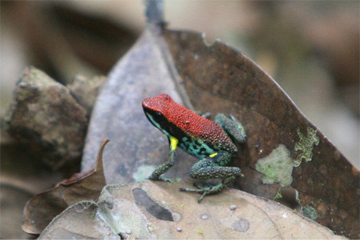
Poison dart frog in Yasuni National Park. Photo by Jeremy Hance.
In exchange for contributions, the Ecuadorian Government will provide a guarantee to maintain the ITT field oil reserves underground indefinitely. The Government will issue Yasuní Guarantee Certificates (CGYs) in US dollars equivalent to the face value of each contribution. The CGYs do not earn interest and do not have an expiration or maturity date as long as the Ecuadorian Government maintains its commitment not to exploit the Yasuni ITT oil reserves. Where the contribution is below a minimum threshold, it shall constitute a donation and will not entitle the contributor to CGYs. The Steering Committee will set the minimum threshold, and we advise that it is low enough to include modest contributions from small organizations and individuals, so as to entitle the majority of contributors to a certificate and guarantee of reimbursement in the event the government decides to drill for oil in the ITT block.

The Spending Plan

The Yasuní Fund will have two windows: a Capital Fund Window and a Revenue Fund Window. The Capital Fund Window will be financed by contributions and/or the sale of certificates, whereas the Revenue Fund Window shall be replenished with mandatory annual revenue payments received for the use of the funds from the Capital Fund Window. Funds from the former will be used to finance renewable energy projects, while the latter will be used to fund conservation and reforestation projects, social programs, energy efficiency, and research and innovation initiatives. Interestingly, only national institutions of Ecuador may submit proposals for the renewable energy projects, so the traditional “economic hitman” style of just funneling money back to foreign corporations will be avoided, but the committee should consider fruitful collaboration with countries and organizations that have expertise in this area.
    Caveat #2. Hydroelectric projects are included in the list of renewable energy projects to be funded by the capital. Although we support increased funding for renewable sources such as solar, wind, and geothermal, many proposed hydroelectric projects in Ecuador may be quite damaging to the environment and actually increase CO2 emissions. Therefore, we recommend some sort of review process that assures funding won’t go to controversial hydroelectric projects that require road-building through primary forest or large reservoirs that drown primary forest, both of which cause emission of greenhouse gases and may reduce or even negate any climate reductions boasted by the initiative.

    Caveat #3. Any funding towards conservation and social programs and energy efficiency may not come for many, many years. If we understand the language correctly, a renewable energy project must get up and running from the funding obtained from the Capital Fund Window, and then make a profit, before any money goes toward any of the initiatives listed under the Revenue Fund Window.
The Decision-making Structure


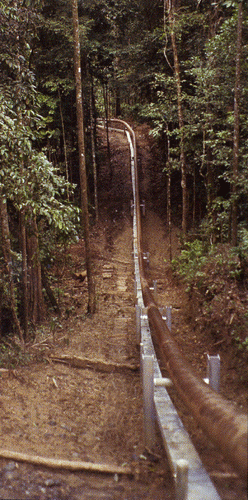
Oil Pipeline in the Rainforest of Ecuador.  Texaco spilled millions of gallons of oil into this delicate ecosystem
Oil Pipeline in the Rainforest of Ecuador.
Contributions to the Yasuní Fund will be made as un-earmarked contributions. Use of funds must first be approved by the Government Coordinating Entity (the Ministry of Natural and Cultural Heritage), then the government-appointed Technical Secretariat, and finally to the government-dominated Steering Committee that governs the Yasuní Fund. No guidelines have been provided as to how members of any of these bodies will be selected.

The Steering Committee will consist of six full members, each one with a vote: three representatives of the Ecuadorian Government, including the Chairperson; two representatives from the Contributor Governments; and one Ecuadorian civil society representative. The Steering Committee shall make decisions by majority, aiming to consensus, but the Chairperson will have the casting vote in the case of no consensus.

Thus, the Ecuadorian government has substantial control over the process of proposal selection and final funding decisions. Who determines how the funds will be spent was the main point of contention back in January when President Correa very publicly rejected any infringements on the sovereignty of Ecuador in making these decisions. The agreed arrangement, therefore, clearly reflects Correa’s strong stance on this issue. There will most likely be substantial pressure on the civil society representative of the Steering Committee to ensure that concerns of indigenous and local communities are being addressed.

The Initial Goal

The contributions to the Yasuní Fund must reach a minimum threshold of US$ 100 million by the end of 2011 to initiate spending of the capital. The full expected minimum amount is US$ 3.6 billion over 13 years. In the case that the Yasuní Fund does not receive US$ 100 million by December 2011, Ecuador will refund the contributors and President Correa will surely move toward developing the oil fields.

The Default Mechanism

In the event that the Ecuadorian Government defaults on its commitment and decides to initiate oil prospecting in the Yasuní ITT oil fields, the CGYs will entitle the holders to be reimbursed the equivalent to the face value of the CGYs. In that event, the agreement states that the uncommitted balance of the Capital Fund Window shall be used by the Government towards the reimbursement to the Contributors of the face value of the CGYs.
    Caveat #4. It is not clear what happens to the money that was already spent from the Capital Fund Window. To really act as a deterrent to future administrations that may be tempted to drill, the agreement must make clear that even spent funds must be returned.
The Climate Change Component

There is clearly an added emphasis on the climate change component of the initiative. For example, the CGYs will include the metric tons of CO2 avoided thanks to that particular contribution. And the maximum total amount of CGYs issued by Ecuador will be equivalent to the value of a total of 407 million metric tons of CO2 not emitted as a result of not exploiting the 846 million barrels of oil. The UNDP describes Ecuador as “the first developing country to propose an effective, quantifiable and verifiable carbon abatement model.” In this sense, the Ecuadorian proposal moves beyond REDD and avoided emissions from deforestation, and focuses more on avoided emissions from eventual fossil fuel burning, a simple yet potentially revolutionary concept. Indeed, President Correa has announced that Ecuador will be highlighting the Yasuni-ITT Initiative at the upcoming climate change meetings in Cancun, Mexico.
    Caveat #5. This initiative will only effectively reduce global CO2 emissions if a number of strict conditions are met. First, as mentioned above, there can be no emissions trading in exchange for certificates and no funding of high-impact hydroelectric projects. Second, the issue of leakage (i.e. simply moving oil extraction to another locale) must be addressed. The Correa administration continues to discuss the possibility of drilling for oil in the area adjacent to ITT known as Block 31, and has announced that in April 2011 they will attempt to lease at least 10 new oil concessions located in the remote southeastern Ecuadorian Amazon. Similarly, the Canadian company Ivanhoe is quickly moving towards development of the Pungarayacu oil field in eastern Ecuador, which may contain even more oil than ITT. So in a brewing nightmare scenario, while on one hand Ecuador makes strides with the Yasuní-ITT Initiative next year, they will be opening up entirely new areas to development, essentially canceling out any climate gains. Third, the initiative must be replicated in other mega-diverse countries with similar hydrocarbon conflicts so the total avoided emissions reach a considerable level. The 407 million metric tons associated with the ITT oil fields are reportedly equivalent to the annual emissions of France or Brazil. If this figure can be multiplied several times over in countries such as Guatemala, Peru, Bolivia, and Nigeria, than we just may indeed be talking about an important global contribution.
The Conclusion

In conclusion, we find that the historic trust fund agreement between Ecuador and the UNDP represents a major advancement as an innovative and potentially precedent-setting tropical forest conservation mechanism. It provides, for the first time, the structure and details regarding the implementation of the revolutionary concept of a developing country being compensated for leaving fossil fuels in the ground in perpetuity. However, it is not yet perfect, and numerous caveats remain, particularly in regards to this type of initiative being billed as a tool to combat climate change. As we understand it, the Steering Committee will have the ability to change certain aspects of the fund. Therefore, we hope that the terms of the arrangement continue to be improved based on comments from direct actors and the general public, such as those detailed above. Meanwhile, the initiative has finally entered the moment of truth for potential funders, as we await news of confirmed contributions from the international community.

Deep in Ecuador’s Rainforest, A Plan to Forego an Oil Bonanza

Ecuador's Yasuni National Park is one of the most biodiverse places on Earth and is home to remote Indian tribes. It also sits atop a billion barrels of oil. Now, Ecuador and the United Nations are forging an ambitious plan to walk away from drilling in the park in exchange for payments from the international community.

by kelly hearn for environment 360

Hunched in the back of a pickup truck speeding down an oil road near the western border of Ecuador’s Yasuni National Park, Juan Carlos Acacho — a short, wiry Shuar Indian — says he’s never heard of email or the Internet. But the father of six, who supports his family on a small jungle farm plot, has heard that oil companies want to drill in Yasuni, and that the government has been resisting them — a move he applauds.

“But the oil companies always do what they want,” he said, smiling and shaking his head.

The question facing Ecuador now is: Will the oil industry have its way in Yasuni?

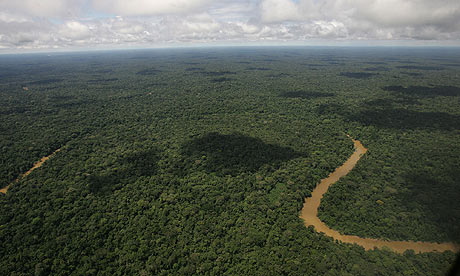
From an airplane, the Yasuni National Park is a sea of jungle green, a 4,000-square-mile rainforest wilderness where the Andes Mountains, the Amazon basin, and the equator meet. Created in 1979, the park overlaps ancestral lands of the Waorani Indians and is inhabited by two groups of natives living in isolation. According to a 2010 study in the journal PLoS One, an average upland hectare in Yasuni contains 655 species of trees (more than the United States and Canada combined) and 100,000 species of insects. One section of the park held at least 200 species of mammals, 247 amphibian and reptile species, and 550 species of birds, making the park one of the most biodiverse places on Earth.

Yasuni
Photo by Kelly Hearn
Yasuni National Park is rich in plant and animal species.
“Yasuni is at the center of the richest zone in the Western Hemisphere,” said Matt Finer, one of the authors of the PLoS One study. “It’s the only area where the diversity of four key groups — amphibians, birds, mammals, and vascular plants — all reach their maximum levels.”

In addition to its remarkable biodiversity, Yasuni sits atop a fortune of oil, making the park an emblem of a development crisis bearing down on the entire western headwaters of the Amazon basin. In addition to oil and gas activity, the region’s forests are being besieged by illegal logging, biofuels agriculture, and an influx of colonists. But the remote northeastern corner of Yasuni near the Peruvian border has attracted the most attention because Ecuador’s largest untapped oil reserves — nearly a billion barrels — lie below it.

In 2007, the Ecuadorian government proposed a way out of the green versus black dilemma: It would forego drilling in the pristine swath of the Amazon in exchange for payments from the international community. For more than two years, the idea seemed to languish. But on Aug. 3, Ecuador and the United Nations Development Program (UNDP) signed an historic trust agreement for managing financial contributions from donors, a hard-won prerequisite for collecting pledges to pay Ecuador for foregoing the revenues it would have received from opening Yasuni to oil drilling.

Many questions remain about whether Ecuador can convince the world to pay it to keep “oil in the soil.” But the August agreement has the potential to become a paradigm for global rainforest conservation programs known as REDD, Reducing Emissions from Deforestation and Forest Degradation.

“Nothing like this has ever been signed before,” said Finer, a biologist with the U.S.-based group Save America’s Forests, who says that any oil drilled in Yasuni would likely be sold on U.S. markets.

Esperanza Martinez, an Ecuadorian activist credited with first envisioning the Yasuni initiative, told Yale Environment 360 that the signing was a “momentous occasion,” adding, “Failure to sign the trust probably would have meant an accelerated invasion of oil in the Yasuní.”

The Yasuni Initiative

Rafael Correa, Ecuador’s president, unveiled the Yasuni initiative three years ago, proposing to forego drilling forever in a region known as ITT — which stands for the oil fields of Ishpingo, Tambococha, and Tiputini — if the international community would pay his country half of what it would otherwise get from drilling: an estimated $3.6 billon over 13 years. Along the way, the UNDP said it would oversee a trust fund for the project in order to calm jittery contributors concerned about future Ecuadorian governments reneging.

A socialist who came to power with the help of the country’s social and environmental justice groups, Correa gained political points when he announced that Ecuador was prepared to take a financial hit in order to save the Amazon and steer trust money to alternative energy, sustainable development, and health projects, as well as to programs to protect two isolated tribes in Yasuni, the Taromenane and Tagaeri.

Observers say that Correa has put himself in a win-win situation. If the plan works, he earns domestic political credibility because of growing support within Ecuador for protecting Yasuni. Internationally, he can burnish Ecuador’s growing green image. “Ecuador genuinely thinks that it can be a green pioneer by showing the rest of the world how one can build an economy while protecting the environment,” said Remi Moncel of the World Resources Institute (WRI). “In fact, as is the case with the Galapagos Islands, Ecuador may benefit from ecotourism, one of the economic benefits of protecting nature and advertising such protective actions to the rest of the world.”

If the plan fails, Correa gets to drill in the ITT while saying that he tried to save it.

The scheme would not only help shift Ecuador’s economy away from oil, it would keep 470 million tons of carbon dioxide in the ground. Now, all eyes are on “the little country with a big plan,” as Ecuadorian officials travel to the United States, Germany, Holland, Belgium, France, Norway, Spain, Italy, the United Arab Emirates, Qatar, Saudi Arabia, Kuwait, Syria, and Lebanon to seek contributions in the coming months. The immediate goal: to raise $100 million in 18 months.

Isolated Rainforest Tribes

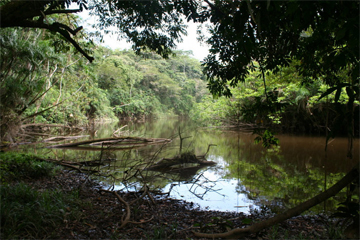
The sprawling Yasuni jungle is made up of moist forests cut by slow, brown rivers; looming trees flanked by buttress roots the size of small cars; giant butterflies; exotic insects; and the ear-popping caws of toucans stirred up by monkeys. Natives who only recently came into contact with the modern world — the Shuar, Waorani, and Kichwa — slip along silent jungle paths with shotguns or bows. Barefoot, they wear western-style clothes as they hunt spider monkeys and rodents in the dense underbrush. Deeper still, hiding in rainforest isolation but increasingly hemmed in by outsiders looking for oil or timber, are the uncontacted Taromenane and Tagaeri, a handful of nomadic family clans living in elongated, windowless huts, ardently rebuffing contact with modernity.

Yasuni
Getty Images
Ecuadorean Waorani natives in Yasuni only recently came into contact with the modern world.
But more and more, the Yasuni is under assault. Several years ago, the Ecuadorian government set out to limit illegal logging and colonization in Yasuni National Park by building a checkpoint on the one-lane ramshackle bridge where the Via Auca oil road crosses the chocolate brown Shiripuno River as it flows through Waorani territory into Yasuni proper. Today, young soldiers can be seen whiling away the hours in a small concrete building listening to soccer matches on the radio and flirting with local girls.

Maria Castro said she knew that the government wanted to keep oil companies out of some places in Yasuni, but that she had never heard of the ITT initiative. “People think the oil companies are the ones that are going to destroy Yasuni,” said Castro, a diminutive Waorani woman in jeans and a bright green halter top. “But it is the loggers and the colonists who do the most damage.” Skeptically, she nodded to the soldiers at the checkpoint. “They say they are stopping them but I don’t believe it.” Castro said that some Waorani natives wanted oil development, but others were frightened of its fallout: pollution, an influx of outsiders, and alcohol problems.

For the bulk of everyday Ecuadorians living in the country’s grindingly impoverished eastern Amazonian lands, the Yasuni-ITT initiative means little. “I know the oil companies fight with the government, but that is it,” said Marco Rodriguez a street vendor in El Coca, a chaotic jungle town in eastern Ecuador where trucks lumber across a bridge over the Napo River carrying illegally harvested timber from Yasuni. “People are too busy trying to live.”

Castro said she doubts the plan will work because the government in Quito, the capital, can’t be trusted to do what it says. “They can’t even stop people from cutting the timber or selling animals from the jungle,” she said. Others agree. Kelly Swing, a researcher at Ecuador’s University of San Francisco in Quito, said that the world lacks confidence in Ecuador, with its history of political instability. “The plan sounds great,” said Swing, “but I think lots of people simply don’t trust that the government will be able to uphold its part of the bargain.”

Others, however, see the UN’s involvement in overseeing the fund as a key to success. And success means achieving three goals, explained Carlos Larrea, a professor at the Andean University Simon Bolivar in Quito and the technical director of the initiative. “We are mitigating global warming, preserving biodiversity in one of the most important hot spots on the planet, and mitigating poverty by creating sustainable employment,” he said.

How would the Yasuni iniatiative work? Contributions to the fund would come from countries, international organizations, businesses, and individuals. Capital investments would be made in renewable energy projects while the interest earned from those projects would underwrite a separate fund dedicated to reforestation and energy efficiency projects, as well as investments in social programs and science and technology. The fund will give contributors Certificates of Guarantee (CGY) ensuring that “the crude stays, in an indefinite manner, below ground.” The CGYs will be returned at full value if the Ecuadorian government ever opens ITT to drilling. The funds generated by the initiatives will be invested throughout Ecuadorian society, though there are no details yet about which organizations would receive the money.

“This plan has the goal of creating a new model by making the country less dependent on revenues from fossil fuels and protecting Ecuador’s most precious natural assets” said Moncel of WRI. “This is a good example of low-carbon development, where economic growth is pursued hand-in-hand with environmental protection.”

Trust payments from the Yasuni initiative are designed to support reforestation and forest preservation programs even outside the boundaries of the park, potentially involving 5 million hectares across Ecuador — nearly 20 percent of the country. Larrea said that the Yasuni model could be a good one for a host of developing countries — such as Peru, Papua New Guinea, and the Republic of Congo — that have high biological diversity and reserves of fossil fuels in environmentally sensitive areas.

Many Ecuadorians are proud that their government is pushing back against global oil companies. Ecuador is home to what may be the world’s largest environmental lawsuit, one pitting 30,000 Cofan natives against Chevron for environmentally injurious practices committed by its predecessor company, Texaco. Said Pamela Martin, a former Fulbright Scholar and political scientist at Coastal Carolina University in South Carolina who has worked in Yasuni since 2006, “Many involved in the Texaco situation have said ‘nunca mas’ [no more] and have supported the Yasuní initiative because of what they’ve learned in their multiple-decade battle with Texaco and Chevron.”

Ecuador's Highest Waterfall Threatened By Chinese-Financed Dam

By Kimberley Mok for Treehugger.com, 9 September, 2010

sanrafaelecuador.JPGPhoto: Say goodbye to San Rafael Falls, Ecuador? (via listafterlist.com)

Ecuador made waves not too long ago as the first country to not only recognize the constitutional rights of ecosystems, but also for demanding money in exchange to not drill into their rich oil reserves -- located under their equally-rich rainforests.

Now, the cash-strapped South American nation is courting controversy again as it plans to go ahead with a Chinese-financed hydroelectric project that could dry up San Rafael Falls, the country's highest waterfall.

Mongobay reports that according to environmental organization Save America's Forests, the 1,500 megawatt Coca-Codo Sinclair Hydroelectric Project -- the largest of its kind in Ecuador -- will negatively impact the Sumaco Biosphere Reserve, which sits in the biodiverse transition zone between the Andes and Amazon. San Rafael Falls itself is a major draw for ecotourism in the region.

"Business as usual"
Ironically, the $1.7 billion hydroelectric deal with the Export-Import Bank of China comes after the Ecuadorean government decided to legally recognize the rights of nature, and to preserve
another national park, the Yasuni Reserve, from oil drilling last year.

"So basically you have the first country in the world that legally respects nature, and they are about to destroy their greatest waterfall," says Matt Finer of SAF. "While we applaud and support Ecuador's revolutionary initiative to leave oil reserves under the Amazon, this hydroelectric project is just a step back to business as usual."

The dam is slated for completion in 2016. Meanwhile, environmentalists point out that Ecuador's energy needs could be better supplied by alternative hydroelectric and geothermal projects that are also underway.

Capacity has been exaggerated
In addition, there are concerns that there's not enough study being done into the overall environmental impacts, and that the dam itself is designed for higher flow rates than the actual, in order that the dam look economically better on paper. The Asia Times reports:

"The installed capacity projected by the government has been exaggerated and does not have a sound technical basis," Jesus Jativa, who holds a PhD in electrical engineering, told Inter Press Service (IPS). [..]

"The pre-feasibility study completed by the Italian firm Electroconsul in 2008," which served as the basis for the government to report a projected potential of 1,500 MW, "is not based on hydrological studies," Jativa said. [..]

Jativa said the method of calculation used was theoretical: "In order to project $153 million in fossil fuel savings between 2016 and 2020, the installed capacity has been raised, as if the water flow rate in the Coca river could be increased by decree.

"That difference of 36,000 liters per second is an invention, because there are no studies showing that, and the minimum ecological flow required to keep the river alive would be compromised," Jativa said. "The economic explanation is neither technically nor environmentally sound."


Monday, September 06, 2010

Ecuador Plans to Reduce Corporate Tax Rate in Bid to Encourage Investment

Bloomberg, Sept 2, 2010

Ecuador’s government will propose a 3 percentage point tax reduction for businesses to help boost investment and job growth in South America’s seventh-biggest economy, Production Minister Nathalie Cely said.

President Rafael Correa’s Cabinet agreed yesterday to propose a cut in the corporate income tax rate to 22 percent from 25 percent in an effort to at least double investment by next year, Cely, a 45-year-old Harvard University-trained economist, said today in an interview at her offices in Quito.

Ecuador’s government is rewriting at least 31 laws, including industrial, financial, labor, land, and oil regulations, after approving a new constitution in 2008. The industrial bill to be proposed to Congress will create tax incentives for companies to invest in rural areas and sell shares on the nation’s securities exchanges, Cely said.

“It’s very important to investors that the rules of the game are clear and that they have incentives to invest,” Cely said. “In Ecuador there’s been a certain mistrust between the private and public sectors in relation to the economic model that the government wanted to implement.”

The proposed new industry law “makes it clear that we trust productive investment,” she said.

Port Concession

Ecuador has also signed a memorandum of understanding with the Singapore Aviation Consortium, a jointly-owned public- private industry group, to operate the Port of Manta and the city’s airport, Cely said. The company will spend more than $500 million to improve the Pacific coast city’s transportation infrastructure, she said.

The concession was previously held by Hutchison Port Holdings Ltd., the world’s largest container-terminal operator, which stopped operating the port last year over a contract dispute.

Rohani Baharin, an official at Singapore Aviation Consortium, didn’t respond to an e-mail seeking comment sent after normal business hours.

Asset Allocation Advisors Group Ltd., a Hong Kong-based real estate development firm, told Ecuador’s government yesterday that it plans to invest $300 million in tourism projects, including hotels in three cities on the country’s Pacific coast, Cely said. The company has already begun buying land, she said.

Peter Obrist, the company’s chief executive officer, didn’t answer telephone calls to his Hong Kong and Abu Dhabi offices after normal business hours.

‘Aggressive’ Goal

Companies may invest more than $2.5 billion in Ecuador in 2011, up from about $1.2 billion this year, Cely said. The proposed tax cuts and incentives should help boost investments to more than $4.2 billion by 2014, which will create jobs, she said.

Ecuador’s unemployment rate fell to 7.7 percent in the second quarter from 9.1 percent in the three months ending in March, the country’s National Statistics and Census Institute reported in July.

“Our goal is very aggressive,” Cely said. “We are putting aside the doubts that some groups in this country may have had” about investing, she said.

The extra yield investors demand to hold Ecuadorean dollar bonds instead of U.S. Treasuries narrowed eight basis points, or 0.08 percentage point, to 10.32 percent at 2:34 p.m. New York time, according to JPMorgan’s EMBI+ index. Ecuador’s spread has widened 2.63 percentage points this year, compared with 0.29 percentage point for the index.

Ecuadorean government debt is the second-riskiest after Venezuela’s among 15 developing nations tracked in JPMorgan’s benchmark emerging-markets index.